Who is Mr.Cohen? Trump’s attorney received $350,000 for the Izmaylovskaya Criminal Group — Felshtinsky
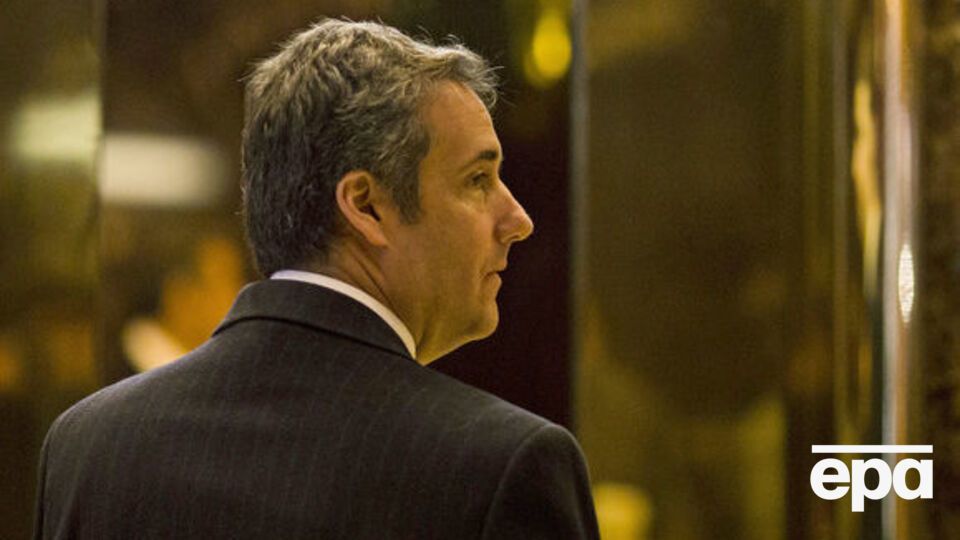
Michael Cohen in Trump Tower in Manhattan on January 12, 2017
Photo: EPA
U.S. President Donald Trump’s personal attorney Michael Cohen received a check for $350,000 in 1999 for one of the leaders of the Izmaylovskaya Organized Crime Group. It was reported in an exclusive material for "GORDON" by Yuri Felshtinsky, a Russian American historian and the author of the book “Blowing up Russia: Terror from Within”. Based on more than a hundred archival records of American courts, which are open to the public in the US, the expert maintains that the Russian hockey player Vladimir Malakhov was used in the scheme, and the whole story was revealed accidentally because of a check, which became the subject of litigation. All the supporting documents are available in the editorial office.
Michael Cohen received a check for $350,000 from the Russian hockey player Vladimir Malakhov
Michael D. Cohen, President Donald Trump’s personal attorney, has been working for The Trump Organization since 2007 and is a member of the Trump World Tower Condominium Board and the Trump Park Avenue Condominium Board. He was involved in the recent attempt to implement the so-called peaceful Russian-Ukrainian plan developed by Felix Sater and Andrey Artemenko, which received extensive coverage in the world press. He has also been a confidant of the Russian organized criminality since at least 1999 and has been laundering money for Russian citizens having or suspected to have connections with the Russian mafia.
It follows from court materials of 2006-2011, which are kept in the U.S. court archives.
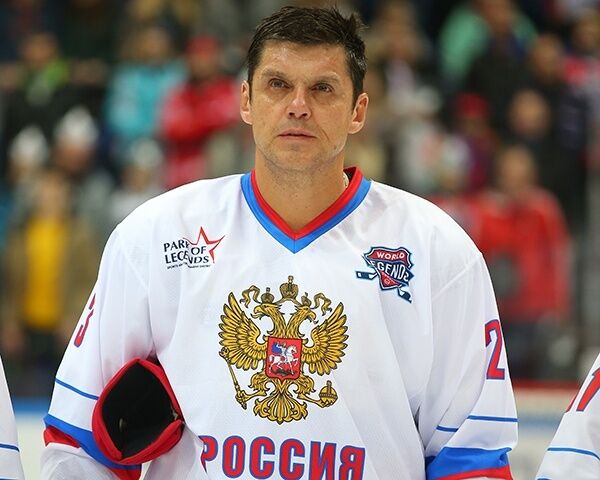
In particular, on 19 January, 1999 Michael Cohen received a check for $350,000 from the Russian hockey player Vladimir Malakhov, now living in Miami, who in 1999-2000 played for different clubs in Canada, New Jersey, and New York.
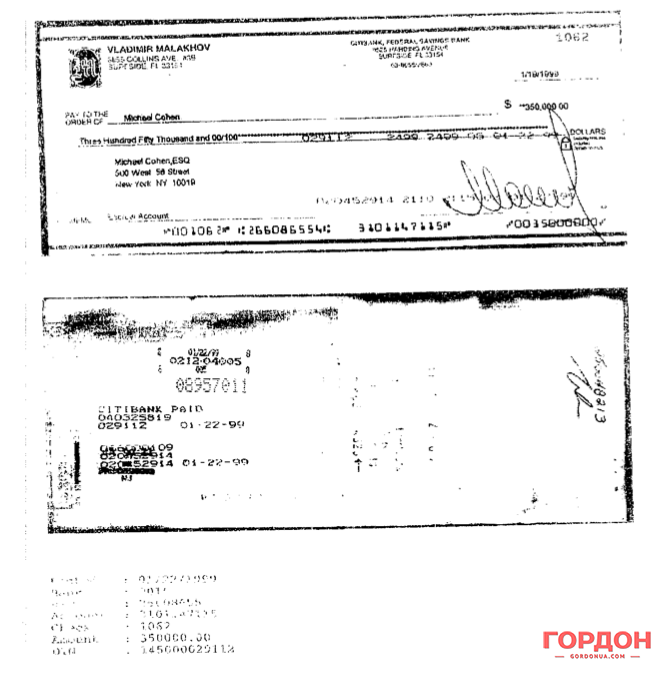
This check was deposited by Cohen to one of his attorney accounts, but, incidentally, it became the focus of litigation in 2006.
On 2 May, 2007, following a phone conversation, Michael Cohen received a letter from Marc D. Wolfe on this matter:
"The purpose of this letter is to summarize and confirm our conversation of this date, as well as the information that you have provided us over the past week regarding the above matter.
As you know, we are in possession of a check in the amount of $350,000 written to a “Michael Cohen” at the address of “Michael Cohen, Esq,. 500 West 56th Street, New York, N.Y. 10019”. You have reviewed a copy of the back and front of this check, as well as the first page of the Complaint (including case style), which we provided.
After such review, you have indicated that you did occupy this office as of the date of this check (1/19/99), and were the only Michael Cohen there at that time. Otherwise, you are completely unfamiliar with any aspect of this incident, including the identity of any of the parties to this lawsuit. You state that you never had any involvement in this transaction whatsoever. You also state that the endorsement on the back of the check is not your signature.
You also indicate that you are unfamiliar with the account numbers listed on the check, but have asked your accountant to ascertain whether you were affiliated with any of the accounts. Should this investigation reveal that you were affiliated one or more of these accounts, we would appreciate knowing whether this check was deposited into said account, and the ultimate disposition of the funds".
In other words, Cohen mentioned in the phone conversation with Attorney Wolfe that he doesn’t know anything about the check, that the endorsement on the back of the check is not his signature, and that he was unfamiliar with the number of the account to which the check was deposited. In a nutshell, Cohen claimed to not have received $350,000.
On 21 May, Cohen received another letter from Wolfe saying that Cohen had to make a deposition regarding the check. It followed from the letter that Cohen had already refused to make a deposition voluntarily so he had to be summoned to court:
"As I indicated in our prior conversations, it will be necessary for us to take your deposition in the above matter. […] As you have indicated that you will not voluntarily appear, we have begun the process of having a subpoena issued through the New York courts. For your information, we will also be requesting the production of documents relating to your bank records and more specifically to the check in question.
We anticipate conducting the deposition in either July or August, and will be happy to schedule the deposition at a time and place that is most convenient to you. In this regard, please contact us at your earliest convenience to discuss scheduling. Should we not hear from you, we will be forced to pick a date and time and issue process accordingly".
On June 6, 2007, the deposition was scheduled for 3 August at 1350 Broadway, Suite 1407, New York. Cohen was requested to produce the following documents:
- A copy of all records reflecting receipt of check no 1062, dated 1/19/1999, drawn on account of Vladmir Malakhov, account no. 3101147115 at Citibank, Federal Saving Bank, Sunrise, Florida, and payable to Michael Cohen in the amount of $350,000.00 , including but not limited to receipt(s), ledger card(s), trust account(s), office account(s), escrow account(s), client bill(s), client statements(s) and computerized accounting ledgers and records.
- Copies of all records pertaining to account 250048213 for the period January 19, 1999 through February 18, 1999, including but not limited to monthly statement(s).
- All correspondence, both received and sent, relating to check no 1062, dated 1/19/1999, drawn on account of Vladmir Malakhov, account no. 3101147115 at Citibank, Federal Saving Bank, Sunrise, Florida, and payable to Michael Cohen in the amount of $350,000.00
- All records related to the disbursement of proceeds from check no 1062, dated 1/19/1999, drawn on account of Vladmir Malakhov, account no. 3101147115 at Citibank, Federal Saving Bank, Sunrise, Florida, and payable to Michael Cohen in the amount of $350,000.00 deposited into account number 250048213, including but not limited to cancelled check(s), client ledger card(s), trust account ledger(s), escrow account ledger(s), wire transfer instructions, and correspondence.
Cohen delayed the deposition as much as possible resorting to various tricks. Eventually, he had to appear before the court on September 17, 2007 at the said address in New York. He testified by phone.
Clearly Vladmir Malakhov had to have known somebody who I was affiliated to and the only person I can -- Simon Garber, who happens to also be Russian
However, Cohen did not produce any records or documents and was very laconic answering the questions. He recognized having received a check for $350,000 from Malakhov in January 1999 and confirmed that he had clients from Russia in 1998-1999, but he indicated that he didn’t go to Russia during that period and, to the best of his knowledge, did not send money to Russia or Ukraine from his accounts. Below is Cohen’s testimony, partially abridged:
As a result of Cohen’s examination, the court concluded as follows:
"Michael Cohen – the payee on the check -- repeatedly stated that he has no personal knowledge and no records of any check of $350,000.00 made out to him or to his trust account in 1999. Mr. Cohen is also entirely unaware of the identity of any of the parties or other witnesses in this lawsuit. Mr. Cohen reiterated multiple times that he does not know Defendant Malakhov and does not understand why he would receive a $350,000.00 check from Defendant Malakhov".
In other words, Cohen refused to share any details of the transaction claiming that he did not know why he had been sent a check for $350,000; he did not remember how he used this money and did not remember who they were intended for and what happened to this $350,000; he was not familiar with and had never contacted Vladimir Malakhov, who wrote the check, though he would normally not have accepted (but did accept) a check for $350,000 from a stranger and would have returned (but did not return) it to the writer.
$350,000 transferred to Michael Cohen was intended for one of the leaders of the Izmaylovskaya Organized Crime Group
We will help Mr. Cohen recall what happened to the check for $350,000 back in 1999, who this money belonged to, and what happened to it then, relying on testimony of Mr. Cohen himself, who relaxed at the end of the examination and said,
"The only way I would have received any funds, whether it is $35 or $350,000, is I would have had to have received the same type of instructions from the same person who wrote the check in order to disburse the fund".
Cohen’s only inaccuracy was that the person who gave him instructions regarding the disbursement of the funds was not the same person who wrote the check, it was not Malakhov.
$350,000 transferred to Michael Cohen was intended for one of the leaders of the Izmaylovskaya Organized Crime Group (OCG) Vitaly Yuryevich Buslaev nicknamed Buslay (born in 1965). The police records of 1996 describe him as follows:
“The group has one leader – Oleg Ivanov, 55 years old, born in Kazan. However, the Izmaylovskaya OCG is not governed by leaders, as in other groups, but rather by “kingpins”. There were five of them – Victor Nestruev ("Boy"), Sergey Trofimov ("Trofim"), Vitaly Buslaev ("Buslay"), Anton Malevsky ("Anton"), and Aleksandr Derbyshev. Anton Malevsky was the most famous. It was partly because he had been detained by the police with arms several times, but he managed to evade responsibility. Some sources interpret it in such a way that Anton was taken “under the wing” of special services and started cooperating with them”.
Buslaev lived in Moscow. In the early 2000s, he worked for Private Security Company Vityaz-AK, which is often a legal disguise of criminal activities. At the same time, Buslaev was the director general of three companies: OOO (limited liability company) Bazagaza, ООО Dormidont Rielt, and OOO Legenda Project Group. In turn, Legenda Project Group owned ООО Great Hotel Moscow and ООО Great Hotel Suzdal. Great Hotel Moscow lies 200 meters from the Kremlin Troitskaya Tower. The hotel overlooks the Kremlin, and the territory of the hotel is guarded by the Federal Security Service of the Russian Federation. The owners of Legenda Project Group got the hotel from a confidant of the Rotenberg brothers, who are close to Putin. A partner of Legenda Project Group was the owner of Metropol Hotel Mikhail Slipenchuk, a billionaire and a member of the State Duma of the Russian Federation in 2011-2016, who has co-owned Great Hotel Moscow and Great Hotel Suzdal since 2015.
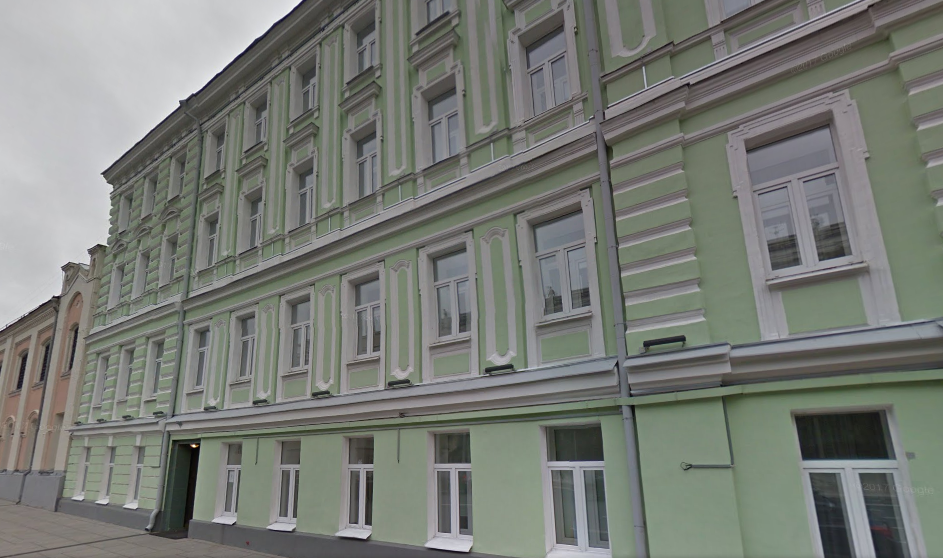
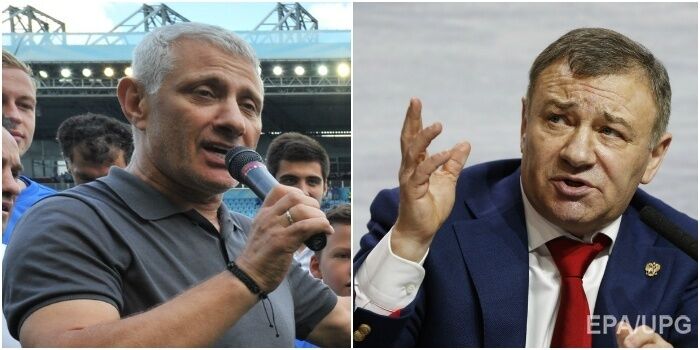
Buslaev’s name was also mentioned in relation to the murder of the journalist Georgiy Gongadze in Ukraine. However, apart from a mention of Buslaev’s name as a mastermind of the murder in a phone conversation, there has been no more evidence of his complicity in the crime and no new information has become available ever since.
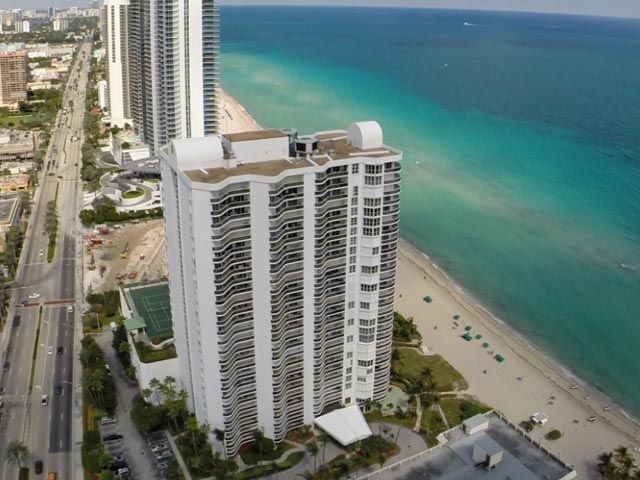
Within Buslaev’s current activity, very much is linked to big business in Russia, big Russian businessmen and the Rotenberg brothers, Putin’s partners. However, back in 1996, Buslaev was only in the beginning of his way to the top. The money he wanted to spend on buying property in the USA – it’s hard to judge whether legal or illegal because any money in Russia was illegal then – belonged to Buslaev. In January that year, he came to Miami with his 22-year-old girlfriend Yulia Fomina and found property in the building at 16711 Collins Avenue, Miami Beach, Florida, which he bought a bit later for $473,900 in cash. The payments were made in 1996 in three instalments: $96,000 on 18 February, $48,000 on 18 April, and the rest $329,000 on 29 November, including $324,040.64 that was transferred to the account of Florida building owners by telex.
Actually, the apartment had not been built yet. The multi-story building was under construction, but it was already advertised in Moscow. Many of Buslaev’s and Fomina’s friends bought uncompleted apartments in that building. In February 1996, Buslaev and Fomina returned to Moscow. According to Yulia, they had an accident then. Fomina was seriously injured because she went out of the car after the accident and was run down by a passing car. She spent almost a month in hospital. Buslaev was not injured. In March, Buslaev and Fomina came to the USA again and spent there five months until September 1996. It seems that Buslaev was hiding from something, which is why he stayed in the USA for so long.
She had a two-car parking at her building in Miami. One car was an Aston Martin, and, as a rule, the other was a Mercedes
Fomina came to the USA for the third time by herself around October 1996. Buslaev remained in Russia. The completed apartment in Florida was bought by him in the very end of November 1996, but Buslaev did not have a chance to live in it because he could not get an entry visa to the USA due to suspected connections with the Russian organized crime.
Yulia did not work in the U.S. and lived at the expense of Buslaev, who generously supported her. She had countless money. According to witnesses and Yulia herself, she lived a luxurious life. She had a two-car parking at her building in Miami. One car was an Aston Martin, and, as a rule, the other was a Mercedes. Yulia often went to Russia and Europe visiting, among others, Buslaev (according to her, they last met in 2004) and travelled in the USA. As Yulia testified on March 22, 2006, all her expenses were covered by “her friend” Aleksandr Varshavsky, Buslaev’s friend, a businessman working in car industry, with whom Buslaev had a system of mutual settlements. According to Yulia, Buslaev was also engaged in car industry. The relationships between Yulia Fomina and Varshavsky were so close that he became the only person whose phone number was indicated in the Emergency Resident Information.
According to Yulia’s testimony, she did not know how Buslaev transferred money to her because all her accounts and finances were managed by Varshavsky’s secretary Svetlana Gerus. All Yulia Fomina had to do was sign checks and not ask any questions. And she seems not to have been asking them.
Some years later, these questions were asked by the U.S. prosecutor’s office to Varshavsky himself. Varshavsky owned at least two car businesses in the USA (Avilon Group and New York Motors) and a Mercedes and Ford dealer network in Moscow. In December 2013, a court in New Jersey initiated criminal case against Varshavsky accusing him of income concealment and tax evasion in 2008-2012. The transactions that gave rise to American investigators’ suspicions included the transfer of $30 million from Russia to the U.S. account of New York Motors on March 18, 2008; transfer of $7.2 million from Russia to the account of Avilon Group in 2009 for the purchase of a Bombardier jet; transfer of $22 million to the account of the same company in 2010 after the sale of the jet. On September 22, 2010, another $5 million was transferred to Varshavsky’s account in the USA from Moscow.
In June 2011, Varshavsky bought an apartment in a luxurious skyscraper at 25 Columbus Circle in New York for $20.5 million in cash ($24.3 were transferred to the account of his New York company for real estate transactions European Realty). It appears that Buslaev and Fomina’s friend Aleksandr Varshavsky was dealing with big money.
But then, in late 1998, there came the August crisis in Russia and the instability of the ruble, which dropped several-fold, and Buslaev needed dollars so he decided to mortgage the property purchased in Yulia’s name and get $350,000 out of the property. On January 4, 1999, Yulia Fomina signed documents acknowledging the receipt of a $455,030 loan from Malakhov and the transfer of the Miami condo into the ownership of Lyudmila Malakhova (Vladimir Malakhov’s wife) as a security of the loan. On 11 January, the documents were forwarded by her attorney to Malakhov’s agent Paul Theofanous.
On 19 January, Malakhov sent a check for $350,000 to the indicated address to the American lawyer Michael Cohen. According to several witnesses, including Theofanous, the rest of the money (approximately $105,000) was given by Malakhov to Yulia Fomina and Buslaev in cash, though the parties to the transaction – both on Fomina’s and on Malakhov’s side – avoided answering questions about the cash during the litigation. It is clear why: the transfer of large amounts of money in cash could constitute a violation of the American tax legislation though Malakhov honestly earned his money as a hockey player. According to his tax returns, he earned $18,465,346 between 1999 and 2004.
When Cohen testified in 2007 that he did not know Malakhov and did not transfer money to Russia he probably told the truth
Having given $350,000 to Cohen for Buslaev and additional money in cash to Fomina, Malakhov fulfilled his obligations towards Buslaev. Buslaev’s apartment remained as a security, and it couldn’t disappear. But how could Buslaev in Moscow get the money transferred to Cohen in New York?
When Cohen testified in 2007 that he did not know Malakhov and did not transfer money to Russia he probably told the truth, though he left room for maneuver by saying “to the best of my knowledge”. Cohen’s money laundering scheme was different. Indeed, money did not leave the USA. Cohen received money to one of his accounts, confirmed its receipt, and then the owner of the money (Buslaev in this case) received $350,000 in Russia from a different person, who had to get $350.000 out of Russia. After Buslaev’s confirmation that the money was received in Russia, Cohen released $350,000 to American accounts indicated by the client in Moscow. As a result of this simple transaction, Buslaev received absolutely clean $350.000, most likely in cash; Cohen transferred absolutely clean $350.000 received from the hockey player Malakhov to some other American accounts, where this money further stayed absolutely clean because they had not crossed the border and never raised suspicions of the U.S. Internal Revenue Service and the FBI. Most probably, Cohen did all this for an interest because it is unlikely that he did this for free.
Since Cohen refused to provide the court with any records, statements or documents, it remains to be guessed what interest he earned from laundering money, as what Attorney Cohen did was classical money laundering.
It is hard to say how numerous Michael Cohen’s clientele was. There have been many Russian natives among his friends since long ago. It is neither good nor bad in itself. But a person, who has recently become the American president’s personal attorney, finds himself in a special situation because he is obliged to give answers to many natural questions posed by the public and the U.S. law enforcement agencies.
Michael Cohen married the Ukrainian citizen Laura Shusterman. Laura’s father, Fima Shusterman, was born in1945 and has property and investments in the USA. Michael himself once tried to set up business with ethanol (alcohol) in Ukraine but seemed to hand over this business to his brother Bryan. Bryan was also married to a citizen of Ukraine, Oksana Oronova. Bryan’s businesses include the production of ethanol in Ukraine. On March 2, 2017, Oksana Oronova’s 69-year-old father Aleksandr Oronov, who was involved in organizing a meeting between the Ukrainian deputy Artemenko and Michael Cohen concerning Artemenko’s peaceful plan, which was handed to Michael Flynn, the then National Security Advisor of President Trump, was found dead in New York.
Epilogue
Buslaev and Fomina did not return the 1999 debt to Malakhov, and the Malakhovs had to sell the mortgaged property (the condo was sold for $415,000) to return the money. In 2006, Yulia Fomina tried to win back the apartment bought to her by Buslaev by court action; however, after spending several years (the litigation ended in 2011) and around $100,000, she lost the case. The legal costs were covered by her new friend Oleg Lazanovich, an emigrant from Kyiv and the owner of MBT Wine & Spirit (liquor business), who lives in Miami in the same building at 16711 Collins Avenue.
In March 2006, Vladimir Malakhov bought a new condo in Trump Place in Miami at 18101 Collins Ave. The apartment is valued at $1.5 million today.
On March 3, 2010, Malakhov brought an action against the American attorney Michael Cohen laying an accusation that the check for $350,000 written by him on January 19, 1999 was not transferred to anyone, but remained deposited on Cohen’s account. Malakhov claimed back $350,000 plus interests and legal costs.
On April 12, 2010, Malakhov suddenly withdrew his suit without any explanations, thus putting an end to this intriguing detective story about $350,000 received by Trump’s personal attorney suspected of illegal connections with Russia.

How to read ”GORDON” in the temporarily occupied territories
Read